
2. Victory Gardens & Government Promotion
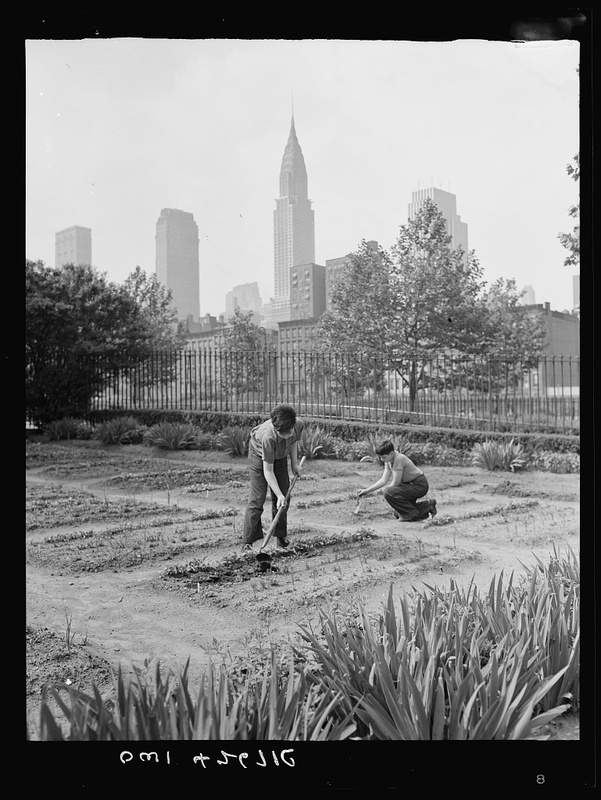
While World War I initiated the start of the war garden movement within the United States, few of these gardens popped up in New York City. For the most part, former school gardens were altered to support this effort. It wasn’t until World War II that the true “Victory Garden” movement emerged. This phenomenon began when there was a critical food shortage that occurred during the war. At the time, to help aid the war effort in Europe, the United States was sending the majority of the country’s food overseas. As a response to this, the federal government began encouraging civilians to plant “victory gardens.” These gardens helped with the war effort and eased the burden caused by the dwindling supply of food. The Greater New York Victory Garden Council also helped to spearhead the effort in New York City.
The program, which began in early 1943 by President Woodrow Wilson and was funded by the War Department, was launched through the Department of Agriculture and the United States Garden Army. New York City’s civilians also joined in the effort, planting over 400,000 victory gardens by December 1943 alone. Covering over 6,000 acres, these gardens produced an estimated 200,000,000 pounds of fresh produce, worth at least $30 million in urban markets. Most victory garden plots averaged 25 by 25 feet, and yielded 500 pounds per unit. By 1945, the city had requested the public plant 450,000 victory gardens, which was an increase of 50,000 from the 1943 outcomes. While many of these gardens were grown on private land, some gardens did spring up in unoccupied lots throughout Manhattan, Queens, and Brooklyn.
Although the federal government encouraged citizens to use their privately owned land, specifically their front and back yards, people also had the option to use publicly owned space. The federal government, through the Department of Agriculture, made plots available to individuals who wished to grow vegetables but did not legally own the space. The entire process was streamlined by the lumber industry, once again in cooperation with the Department of Agriculture, who designed full-sized patterns to help people quickly construct planters and chicken coops. The premade planters consisted of scrap lumber, making them a reasonable and economical choice for a governmental budget.
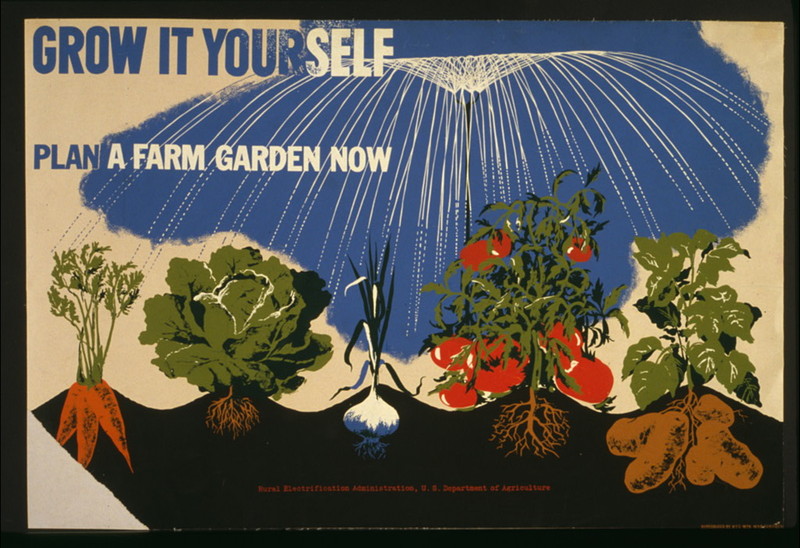
Besides cooperation and support from the federal government, local city agencies did their part to help bolster the victory garden movement. In February of 1943, Mayor La Guardia even allocated the surplus city water supply to the gardens for irrigation, as long as the supply was sufficient for the months of July and August. Although the Department of Agriculture had a large hand in helping to promote victory gardens in rural sections through the use of propaganda, the city garden problems were left up to local government and city organizations. La Guardia promised to make city-owned land available for groups that were interested in the movement, and specifically high school students. He believed that most private owners of land would have no objections and would cooperate with the movement, most likely from intense patriotic pressure.
Production of surplus food aside, victory gardens also fostered a sense of community and boosted morale during a questionable and frightening period in American history. Not only did New York City benefit from this sense of renewed community, so did the majority of the country. One man, William W. Woodbridge, secretary-manager of the Red Cedar Shingle Bureau of Seattle, urged people involved in this movement to “direct all of our hate toward our common enemy and may this hate inspire us to carry our burdens uncomplainingly.” The true unity of the country could be seen through the victory garden effort, even by looking at the movement from either a national or local level.
While many in the city were filled with a patriotic fever, this didn’t necessarily indicate that everybody was on board with the creation of victory gardens. Issues of space also resulted in civil disputes. In 1944, landowner Michael Janicki filed a $50 lawsuit in a Queens small claims court for illegal use of land by Alfred De Rocco. De Rocco believed that a lot adjacent to his apartment was vacant, and with advice from the Civilian Defense Volunteers Office, planted a victory garden at this location. The judge in the case criticized Janicki, stating, “why do you sue this man who is patriotic enough to plant a Victory garden and industrious enough to make the garden productive? This man has followed the advice of the Government in doing what he could do to conserve our food supply. He should be commended and helped instead of sued.” While Janicki clearly had claims to his privately owned space, popular opinion did not see him in the right.
Ultimately, the need for victory gardens diminished at the close of the Second World War. Since the primary purpose of the project had been to yield excess food, the end of the war also saw an end to the need for these spaces. Although some city residents chose to keep tending to their privately owned victory gardens well after the end of the war, many gardens that were maintained on public or borrowed land had to be returned to their rightful owners. Overall, the victory garden movement in New York City saw the collaboration between both private citizens and the local and federal government. This alliance helped better utilize the available public and privately owned city spaces, which helped to aid the war effort under the guise of compulsory patriotism. While this partnership faded when the demand for extra produce was no longer needed, the existence of this coalition showed that local community and governmental interests could be linked when there was a national crisis.