
3. 1970s-1990s: Activist Battles
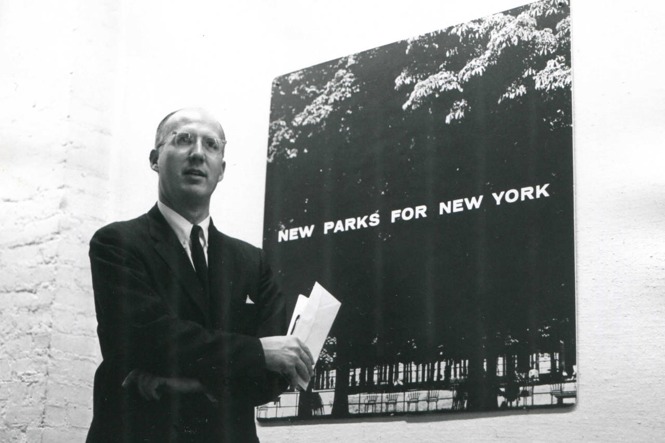
During Congressman John Lindsay’s mayoral campaign in early 1965, Thomas P. F. Hoving, who would soon be Lindsay’s first Parks Commissioner, called for the creation of open-space and green areas as small as one building lot: 100’ x 20’. These modest, quarter-acre playgrounds and community gardens, called vest-pocket parks, would help expand the city’s park and recreational resources into inner-city neighborhoods most in need of new and open spaces. The first vest-pocket park in New York City and in the country opened in May of 1965 on Rev. Williamson’s block of West 128th street. Designed by students in the School of Architecture, at Columbia University, the park merited extensive local and national media attention, with federal, state, and local officials--including Senator Robert F. Kennedy--visiting the park and judging it to be a model of inner-city, open-space design.
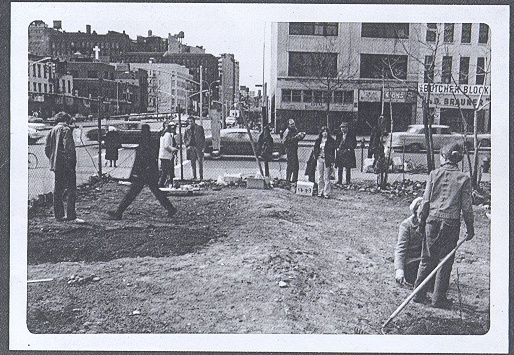
However by the mid-70s, New York City found itself bankrupt and in a financial crisis. In 1977, there were more than 25,000 vacant lots. Left abandoned, the sites were littered with trash, rats, drugs, and stolen car parts. By 1973 activism took its roots, with Liz Christy and her group, the Green Guerillas taking over the abandoned lots with their “seed bombs.” These “bomb,” packed with fertilizer, seed, and water, were thrown over fences around vacant lots where access was otherwise limited, in attempt to beautiful the city with greenery in the face of their neglect. The grassroots program began to grow, gaining neighborhood participation and media coverage with Liz Christy as its Founder. In 1974, the City Office for Housing Preservation and Development approved a lease for $1 a month for the “Bowery Houston Community Farm and Garden,” setting into action the City’s first community garden. The garden was later renamed after its founder, the Liz Christy Community Garden. Green Guerillas began to run workshops, prompting a whole slew of energetic community garden groups to emerge, providing maintenance and neighborhood revitalization efforts in the vacant city-owned lots.
By 1978, with so many gardens cropping up on city-owned lands, the city established Operation GreenThumb, which provided licensing agreements for plots for $1 a year, in an attempt to provide assistance and coordinate with community garden activist groups. To some, GreenThumb provided a way of legitimizing the gardener's effort. But for others, it represented a bureaucratic means to control the appropriation of abandoned land. From the beginning, the City maintained that the leases were issued on “temporary” basis; in order to participate in GreenThumb’s program, gardener’s had to agree to vacate their plots within 30 years if the land was ever selected for development.
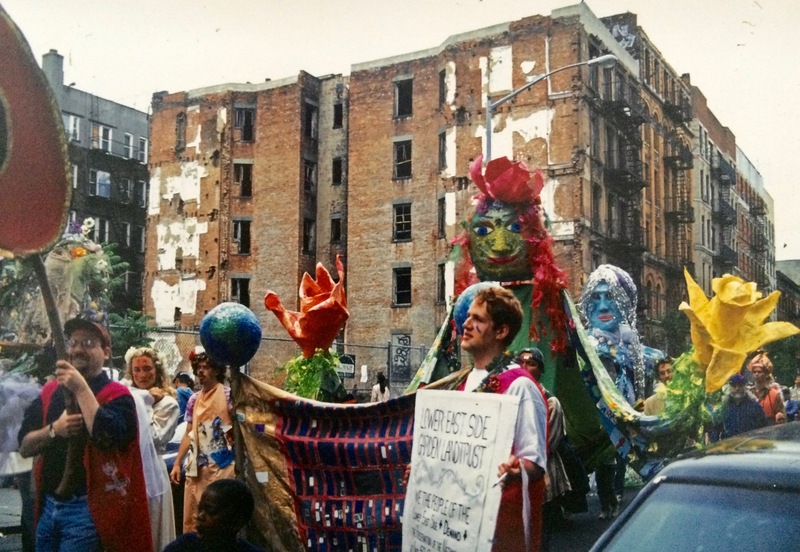
Rising in the early 80’s through the late 90s, a tense and nuanced relationship began between community activist groups and city and governmental officials and departments. Groups like Earth Celebrations organized against the increasing threat of gentrification and the city’s development plans, hosting a pageant each spring with dancers, puppets, and performers to re-enact the gardeners struggle to keep their land. Meanwhile, the City began bulldozing, tearing down these thriving vibrant gardens, such as the Garden of Eden in 1986. These two decades reveal an ongoing debate over authority of community garden space, between the original intentions of the activists and the city’s desire for public development projects.