Paper Lives: Migrant Stories from the A-files
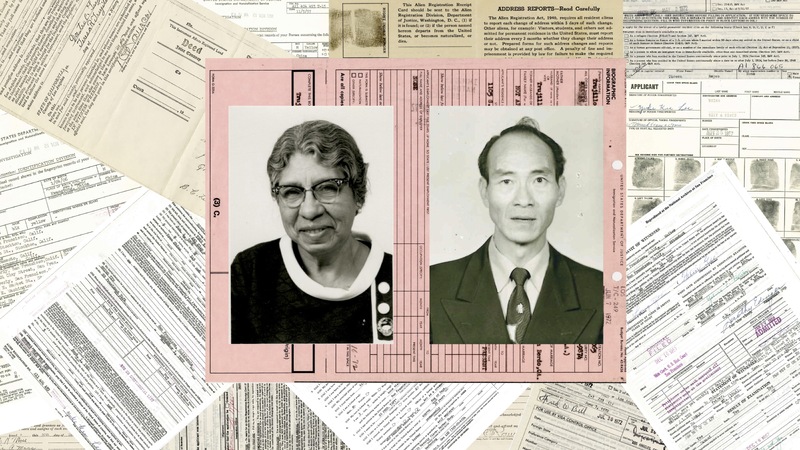
This exhibit explores A-files for two migrants: "George" Yuke Kee Lee and Teresa Reyes Trujillo. Within each person’s A-file, a compilation of documents collected by the government related to their efforts to stay in the United States, is a sketch of a migrant’s life story and evidence of broader trends in migration history. Paper Lives uses annotation and close guided reading of selected documents from Lee and Trujillo’s A-files to demonstrate to scholars and other researchers how to read these important but little-examined primary sources—both for what they say and for what they omit. The exhibit shows how to draw on these or other A-files to access a wealth of information about how immigration laws reverberated through people’s lived experiences and add new texture to immigration history. Paper Lives demonstrates how migrants navigated government policies and shaped their lives in the United States, enabling scholars to humanize migrants’ interactions with the state.
What is an A-file?
Beginning in 1940, millions of migrants went to a post office branch and filled out an Alien Registration Form. The Alien Registration Act required that all non-citizens living in the U.S., except diplomats, employees of foreign governments, and children under the age of 14, register with the federal government. Then, they would be assigned an Alien Registration Number (A-Number). Four years later, the Immigration and Naturalization Service (INS) began standardizing its record-keeping system, using those A-Numbers to create case files in which an individual’s migration records would be collected. They were called Alien Files, or A-files.
What's in an A-file?
An A-file is a bureaucratic record that offers a partial view of a migrant’s life. The INS would add documents to an A-file any time a person with an A-Number engaged with the federal government regarding processes like naturalization, residency, or even deportation. If a migrant filled out a form or submitted a visa, those would go in their A-file. But so too would far more personal papers. Among the many things a migrant might have to produce for the government were identification photos, police reports, affidavits, correspondence, and church memberships. Migrants might also submit proof of address, employment records, and marriage licenses.The collection of papers in each A-file are unique to that individual. And even though the A-files themselves were not compiled until 1944, documents within any given A-file may be much older, like school records or birth certificates.
Why are the A-files important?
A-files are a rich source of biographical information about migrants, and offer a wealth of data from a number of sources all conveniently located in one place. They also may contain records and information unavailable elsewhere.
A-files are evidence of a relationship between migrants and the state. Any given A-File, while not a complete picture, offers a window into the life of a migrant and their negotiations with the state. A-files are a testament to immigrants’ agency, showing how individuals used different strategies as they negotiated their legal status. They also reflect the complex and shifting rules and attitudes surrounding immigration generally, and with regard to particular groups. Understanding A-files will allow scholars and other researchers to deepen public understanding of migrant experiences.
How can you find A-files?
The Migrants and the State Project, of which Paper Lives is a component, aims to provide curated access to the hundreds of thousands of A-files held by the National Archives. Researchers also can request access to a specific A-file, using a migrant’s name or A-Number, directly from the National Archives.