
Browse Items (72 total)
Sort by:
Coat of Arms with Beaver
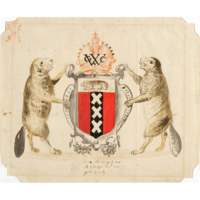
This is a draft of a coat of arms for New Amsterdam that wasn't approved. Inspired by the coat of arms for the city of Amsterdam, this design shows the imperial crown between two beavers instead of two rampant lions. This illustration first appeared…
Petrus (Peter) Stuyvesant
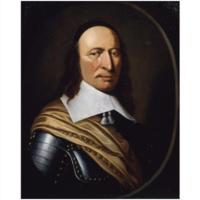
Portrait of Peter Stuyvesant, the last Director General of New Netherland. He was in office from 1647 to 1664.
Castello Plan
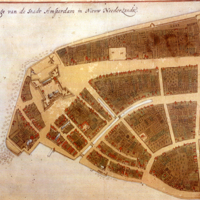
Map of New Amsterdam based on an original that has since been lost, which was created in 1660 by Jacques Cortelyou who served as Surveyor General of the early Dutch colony.
Articles About the Transfer of the New Netherlands
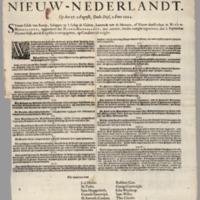
The articles of capitulation surrendered New Netherland to English rule. The agreement contained provisions that maintained certain rights for the settlers, such as freedom of religion and property rights. These articles helped ensure that key…
Flushing Remonstrance
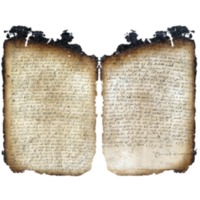
The Flushing Remonstrance, signed on December 27, 1657, was a petition by a group of English citizens who were affronted by persecution of Quakers and the religious policies of Peter Stuyvesant, Director General of New Netherland.
Records of New Amsterdam, Ordinances 1647-1661
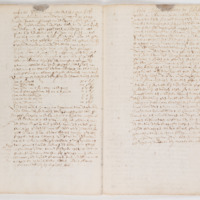
This is an edict from October 10, 1658 on the conversion rate between wampum, beaver, Dutch silver, and household commodities like beer, wine, and bread.
Buttonwood Agreement
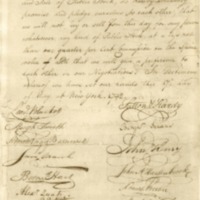
The Buttonwood Agreement was signed by 24 merchants under a buttonwood tree outside of 68 Wall Street on May 17, 1792. It started the New York Stock & Exchange Board, which later became the New York Stock Exchange.
Cotton Report [With Endorsement by Lincoln], February 16, 1863
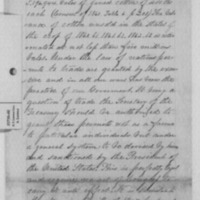
In this report from 1863, an unknown advisor wrote to Lincoln outlining the benefits of continuing to trade for cotton, as well as precautions that would minimize the risk to the war effort. Lincoln endorsed the back of the report as "A. cotten…
Vest Pocket Park, 1968
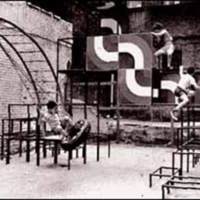
Vest pocket park located at 182 Mulberry Street
Are We to Recognize the Southern Confederacy
Newspaper editorial published in the Liverpool Mercury raising the specter of potentially siding with the Confederacy if the Union didn't end its war with the South.