
Cotton Report [With Endorsement by Lincoln], February 16, 1863
Dublin Core
Title
Cotton Report [With Endorsement by Lincoln], February 16, 1863
Subject
United States--History--Civil War, 1861-1865--Economic aspects
United States--Commerce--History
Cotton
Description
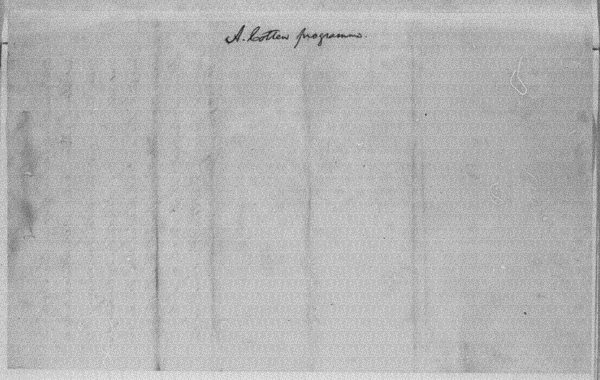
In this report from 1863, an unknown advisor wrote to Lincoln outlining the benefits of continuing to trade for cotton, as well as precautions that would minimize the risk to the war effort. Lincoln endorsed the back of the report as "A. cotten programme." Much of the advice offered here was incorporated into the revised cotton permit system laid out in Proclamation 98.
Creator
Unknown
Source
Library of Congress, Rare Book and Special Collections Division
Date
1863-02-16
Contributor
AB, PP
Rights
Public Domain
Format
gif
Manuscript Item Type Metadata
Text
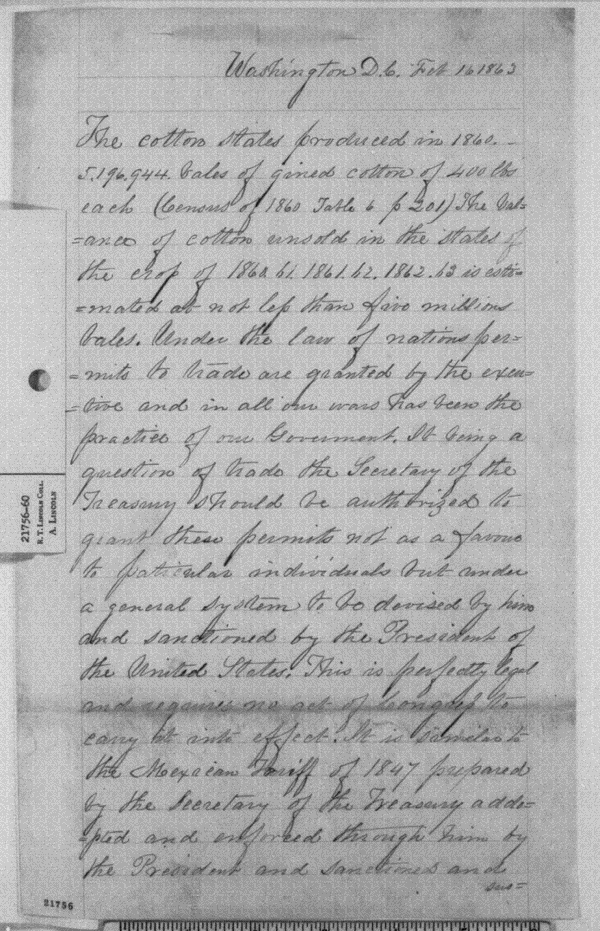
Washington D. C. Feb 16 1863
The cotton states produced in 1860. -- 5.196.944. bales of gined cotton of 400 lbs each (Census of 1860 Table 6 p 201) The balance of cotton unsold in the states of the crop of 1860. 61. 1861. 62. 1862. 63 is estimated at not less than five millions bales. Under the law of nations permits to trade are granted by the excutive and in all our wars has been the practice of our Goverment. It being a question of trade the Secretary of the Treasury should be authorized to grant these permits not as a favour to paticular individuals but under a general system to be devised by him and sanctioned by the President of the United States. This is perfectly legal and requires no act of Congress to carry it into effect. It is similar to the Mexican Tariff of 1847 prepared by the Secretary of the Treasury addopted and enforced through him by the President and sanctioned and sustained as constitutional by the Supreme Court of the United States.
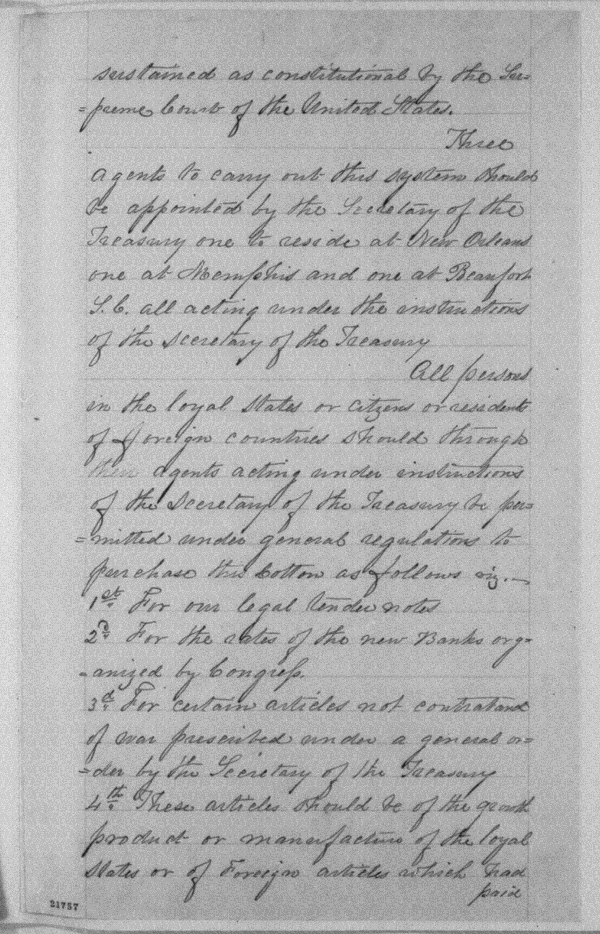
Three agents to carry out this system should be appointed by the Secretary of the Treasury one to reside at New Orleans one at Memphis and one at Beaufort S. C. all acting under the instructions of the Secretary of the Treasury
All persons in the loyal states or citizens or residents of foreign countries should through their agents acting under instructions of the Secretary of the Treasury be permitted under general regulations to purchase this cotton as follows viz.--
1st For our legal tender notes
2d For the rates of the new Banks organized by Congress.
3d For certain articles not contraband of war prescribed under a general order by the Secretary of the Treasury
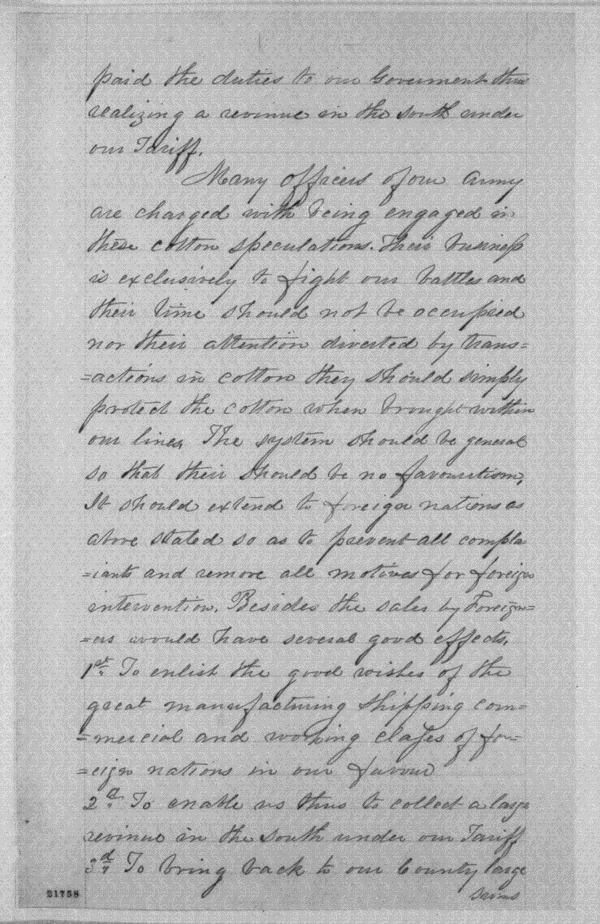
4th These articles should be of the growth product or manufacture of the loyal states or of Foreign articles which had paid the duties to our Goverment thus realizing a revinue in the South under our Tariff.
Many officers of our Army are charged with being engaged in these cotton speculations. Their business is exclusively to fight our battles and their time shold not be occupied nor their attention diverted by transactions in cotton they should simply protect the cotton when brought within our lines. The system should be general so that their should be no favouritism, It should extend to foreign nations as above stated so as to prevent all complaiants and remove all motives for foreign intervention. Besides the sales by Foreigners would have several good effects,
1st To enlist the good wishes of the great manufacturing shipping commercial and working classes of foreign nations in our favour
2d To enable us thus to collect a large revinue in the South under our Tariff
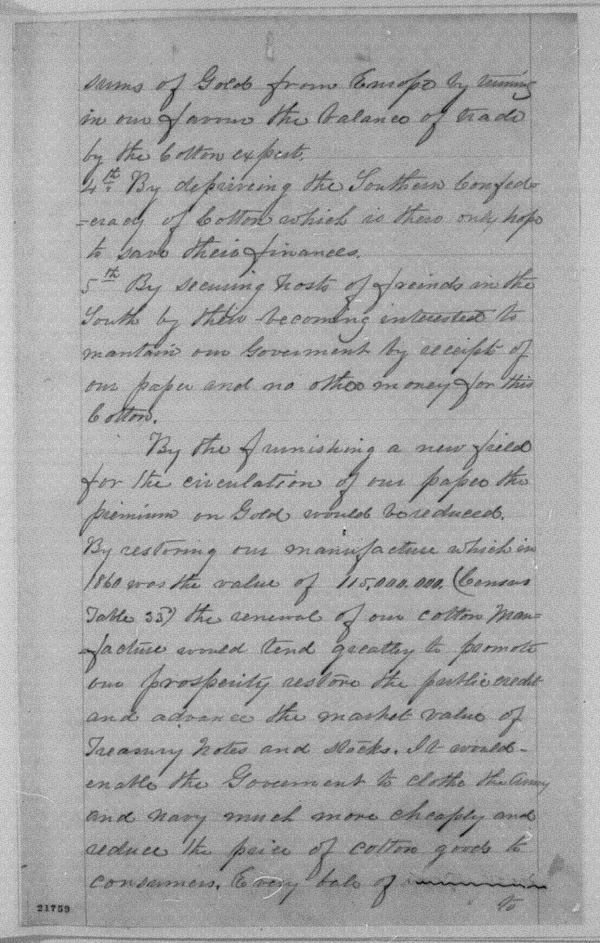
3d To bring back to our Country large sums of Gold from Europe by turning in our favour the balance of trade by the Cotton expert.
4th By depriveing the Southern Confederacy of Cotton which is their only hope to save their finances.
5th By securing hosts of freinds in the South by their becoming interested to mantain our Goverment by receipts of our paper and no other money for this Cotton.
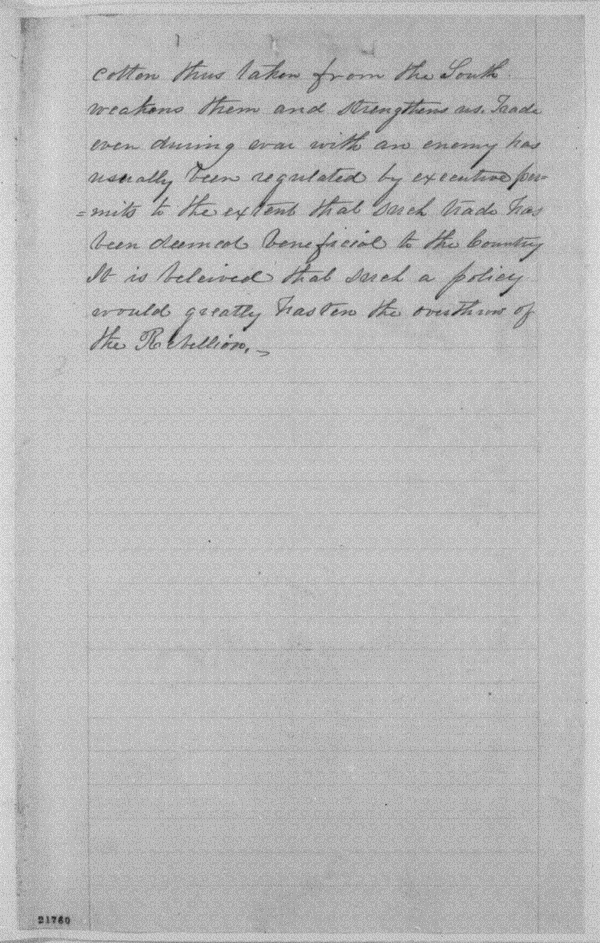
By the furnishing a new field for the circulation of our paper the premium on Gold would be reduced. By restoring our manufacture which in 1860 was the value of 115,000.000. (Census Table 33d) the renewal of our cotton manufacture would tend greatley to promote our prosperity restore the public credit and advance the market value of Treasury Notes and stocks. It would -- enable the Goverment to clothe the Army and navy much more cheaply and reduce the price of cotton goods to consumers. Every bale of cotton thus taken from the South weakens them and strengthens us. Trade even during war with an enemy has usually been regulated by executive permits to the extent that such trade has been deemed beneficial to the Country It is beleived that such a policy would greatly hasten the overthrow of the Rebellion.--
[ Endorsed by Lincoln:]
A. Cotten programme.
The cotton states produced in 1860. -- 5.196.944. bales of gined cotton of 400 lbs each (Census of 1860 Table 6 p 201) The balance of cotton unsold in the states of the crop of 1860. 61. 1861. 62. 1862. 63 is estimated at not less than five millions bales. Under the law of nations permits to trade are granted by the excutive and in all our wars has been the practice of our Goverment. It being a question of trade the Secretary of the Treasury should be authorized to grant these permits not as a favour to paticular individuals but under a general system to be devised by him and sanctioned by the President of the United States. This is perfectly legal and requires no act of Congress to carry it into effect. It is similar to the Mexican Tariff of 1847 prepared by the Secretary of the Treasury addopted and enforced through him by the President and sanctioned and sustained as constitutional by the Supreme Court of the United States.
Three agents to carry out this system should be appointed by the Secretary of the Treasury one to reside at New Orleans one at Memphis and one at Beaufort S. C. all acting under the instructions of the Secretary of the Treasury
All persons in the loyal states or citizens or residents of foreign countries should through their agents acting under instructions of the Secretary of the Treasury be permitted under general regulations to purchase this cotton as follows viz.--
1st For our legal tender notes
2d For the rates of the new Banks organized by Congress.
3d For certain articles not contraband of war prescribed under a general order by the Secretary of the Treasury
4th These articles should be of the growth product or manufacture of the loyal states or of Foreign articles which had paid the duties to our Goverment thus realizing a revinue in the South under our Tariff.
Many officers of our Army are charged with being engaged in these cotton speculations. Their business is exclusively to fight our battles and their time shold not be occupied nor their attention diverted by transactions in cotton they should simply protect the cotton when brought within our lines. The system should be general so that their should be no favouritism, It should extend to foreign nations as above stated so as to prevent all complaiants and remove all motives for foreign intervention. Besides the sales by Foreigners would have several good effects,
1st To enlist the good wishes of the great manufacturing shipping commercial and working classes of foreign nations in our favour
2d To enable us thus to collect a large revinue in the South under our Tariff
3d To bring back to our Country large sums of Gold from Europe by turning in our favour the balance of trade by the Cotton expert.
4th By depriveing the Southern Confederacy of Cotton which is their only hope to save their finances.
5th By securing hosts of freinds in the South by their becoming interested to mantain our Goverment by receipts of our paper and no other money for this Cotton.
By the furnishing a new field for the circulation of our paper the premium on Gold would be reduced. By restoring our manufacture which in 1860 was the value of 115,000.000. (Census Table 33d) the renewal of our cotton manufacture would tend greatley to promote our prosperity restore the public credit and advance the market value of Treasury Notes and stocks. It would -- enable the Goverment to clothe the Army and navy much more cheaply and reduce the price of cotton goods to consumers. Every bale of cotton thus taken from the South weakens them and strengthens us. Trade even during war with an enemy has usually been regulated by executive permits to the extent that such trade has been deemed beneficial to the Country It is beleived that such a policy would greatly hasten the overthrow of the Rebellion.--
[ Endorsed by Lincoln:]
A. Cotten programme.
Citation
Cotton Report [With Endorsement by Lincoln], February 16, 1863. Manuscript. Library of Congress. http://hdl.loc.gov/loc.mss/mal.2175600. Accessed December 4, 2016.
Files
Citation
Unknown, “Cotton Report [With Endorsement by Lincoln], February 16, 1863,” Creating Digital History @ NYU, accessed September 17, 2026, https://aphnyu.org/creatingdigitalhistory/fall2016/items/show/21.
Embed
Copy the code below into your web page