
Browse Items (72 total)
Sort by:
Building Liz Christy Garden, Bowery and Houston Streets, 1973
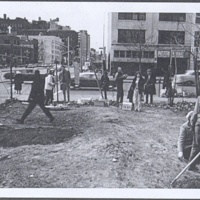
Photos from fellow activist Donald Loggins show New York City's first community garden being planted in 1973, on the corner of Bowery and Houston
Memphis Under the Stars and Stripes
In this account of the occupation of Memphis by Federal troops, the correspondent emphasized the loyalty of the locals and their eagerness to trade. He described stores of cotton and sugar hidden from the Confederates brought out to be sold in Union…
The levee at Memphis, Tenn.
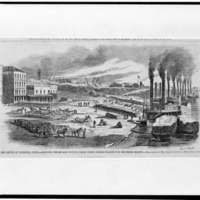
Engraving for Harper's Weekly of cotton and sugar brought out to be sold after the fall of Memphis to the Union Army.
Photograph of New Amsterdam City Hall Today

This brick outline marks the the present-day site where New Amsterdam's City Hall formerly stood.
Letter from William Rathbone V to William Rathbone VI
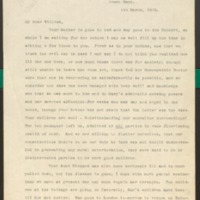
A letter from William Rathbone V, a wealthy Liverpool merchant and politician, to his son William Rathbone VI, noting distress among the poor in Liverpool.
Lewis B. Parsons to Montgomery Blair, Thursday, February 19, 1863
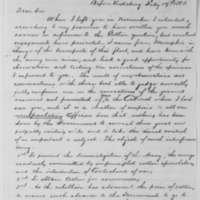
Quartermaster Lewis B. Parsons wrote to share his observations of the cotton trade in occupied territory. Considering the widespread speculation in cotton among officers, he recommended that all cotton be declared the property of either the federal…
Nathaniel P. Banks to Abraham Lincoln, Friday, December 18, 1863
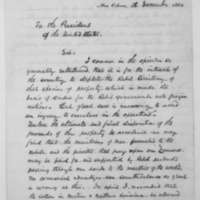
Major General Nathaniel P. Banks wrote to Lincoln in late 1863 to urge caution in the cotton trade. Banks was adamant that no amount of profit could counterbalance the certain wrong of finding "the munitions of war furnshed [sic] to the Rebels."
The Cotton Supply and the Blockade
This report in the Boston Daily Advertiser used the Manchester Cotton Report to estimate the amount of cotton that had evaded the Union blockade.
Samuel R. Curtis to Richard McAllister, Wednesday, July 01, 1863
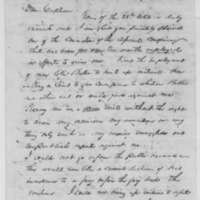
Major General Samuel Curtis flatly denied any speculation, profiteering, or abuse of power in his letter to Commissary of Subsistence Richard McAllister. Curtis attributes the charges to "an infernal conspiracy" and is adamant that he never sold any…
South Carolina Senator James Henry Hammond "Cotton is King" speech on floor of Senate
Excerpts from a speech delivered in the senate before the civil war, South Carolina senator James Henry Hammond warned of dire consequences if the south was unable to deliver cotton to the world.