
The Price of Freedom: Loyalism, the American Revolution, and the Flight from NYC
Home Page
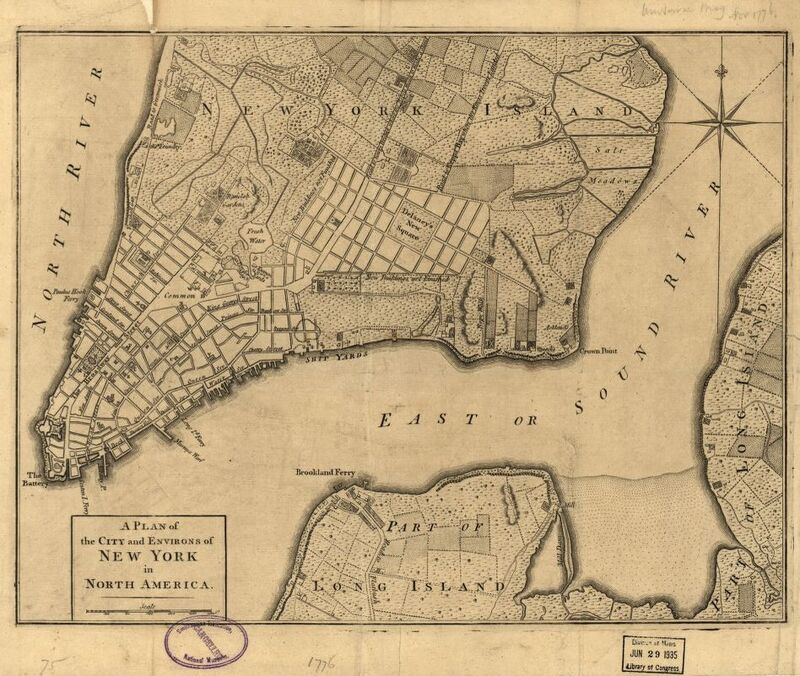
A plan of the city and environs of New York in North America
New York City in 1776, at the outbreak of the Revolutionary War
During the Revolutionary War, New York City was the British military headquarters in the American colonies. Loyalists, or Americans who did not support the revolution, from around the region made their way to the city during the war. At the time, New York was far smaller than it is today: at the outbreak of the war the total population was roughly 20,000 and approximately one third of these people left in 1776 as the British took control.
In October 1777, a British census listed the civilian population of the city as 12,408, of which 1,951 were black. After the British promised freedom to enslaved people who joined their side of the war, an estimated 10,000 black people made their way to the city by 1780.
By 1782 it was evident the British had lost the war and would have to surrender control of New York City. Patriots who had left the city during the British occupation began to return to the city in the winter of 1782-83 to recover their property. Filled with a mixture of Loyalist refugees, British soldiers, and Patriots seeking to recoup their property, the city became a chaotic place. Brawls and organized attacks on Loyalists were common. Slave owners from other colonies came to NYC in an attempt to find and recapture slaves who had run away.
While some Loyalists left New York as soon as possible, others hoped to stay. Many Loyalists who attempted to return to their homes outside of the city found themselves subject to violence or had their homes confiscated. For many Loyalists, the only option seemed to be to flee to other British-controlled territory. While some travelled to England or the Bahamas, around three quarters made their way to Canada – new towns in New Brunswick and Nova Scotia were formed entirely of fleeing Loyalists. The British government offered free passage, sending fleets from New York City to Canada starting in the spring of 1783.
In total, 40,000 Loyalists departed New York City from 1782 to 1783, most of whom were originally from Connecticut, New Jersey, Pennsylvania and other colonies. Approximately 4,000 of these were free blacks or enslaved people who had run away from their masters during the war, recorded in a document titled the Book of Negroes. The last ships carrying British troops and Loyalist refugees left New York City on November 25, 1783, a day that became known and celebrated among New Yorkers as ‘Evacuation Day.’ Immediately after the British left, George Washington and his troops entered the city.
Exploring the stories of a few of these Loyalists offers a new perspective on New York during the Revolution. Select an individual below to learn about their story.
Sources
Burrows, Edwin G. and Mike Wallace. Gotham: A History of New York City to 1898. New York: Oxford University Press, 1999.
Chopra, Ruma. Unnatural Rebellion: Loyalists in New York City during the Revolution. Charlottesville, VA: University of Virginia Press, 2011.
Schecter, Barnet. The Battle for New York: The City at the Heart of the American Revolution. New York, New York: Walker & Company, 2002.