
Browse Items (72 total)
Sort by:
Fergus Peniston to Abraham Lincoln, Monday, September 05, 1864 (Requests permission to take control of property in Louisiana)
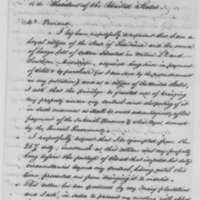
In this letter, Fergus Peniston, a Louisiana cotton merchant, requested permission from the executive branch to transport a substantial amount of cotton to market. He further petitioned President Lincoln for relief from certain taxes and to trade…
Fergus Peniston to Abraham Lincoln, Wednesday, December 28, 1864 (Requests tax exemption)
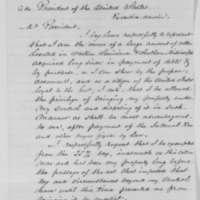
In this second petition to President Lincoln, Louisiana cotton merchant Fergus Peniston reiterated his request for an exemption from a particular tax on his cotton that was passed after he acquired the cotton and freedom to trade outside…
Fergus Penniston, Saturday, April 16, 1864 (Affidavit concerning cotton at New Orleans; certified by Michael Hahn)
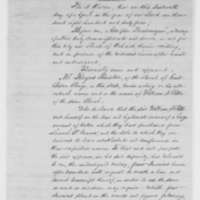
This affidavit, written by Alphonse Boudousquie and certified by Governor Michael Hahn, affirmed that Fergus Peniston and William Pike owned substantial quantities of cotton and were loyal citizens of the United States during the war. Affidavits like…
Flushing Remonstrance
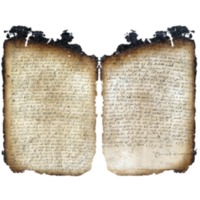
The Flushing Remonstrance, signed on December 27, 1657, was a petition by a group of English citizens who were affronted by persecution of Quakers and the religious policies of Peter Stuyvesant, Director General of New Netherland.
Gardens are Great, but not at the Expense of New Housing
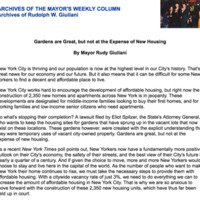
Weekly Column by Mayor Giuliani in September 2001, arguing for the destruction of community gardens to make room for housing development projects.
General Grant's Order Expelling the Jews from Paducah, Ky. General Order - No. 11
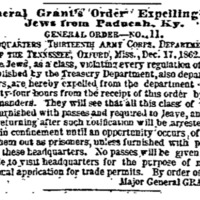
Article about Ulysses S. Grant's Order expelling Jews from the Department of Tennessee, Grant's military district. In the order, Grant accused Jews of "violating every regulation of trade established by the Treasury Department," including the trade…
Grow It Yourself: Plan a Farm Garden Today
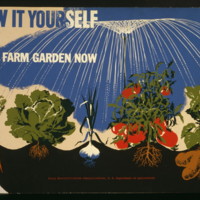
Poster for the U.S. Department of Agriculture promoting victory gardens, showing carrots, lettuce, corn, tomatoes, and potatoes growing.
Hannibal Hamlin to Abraham Lincoln, Tuesday, January 03, 1865 (Cotton permit for Fergus Peniston)
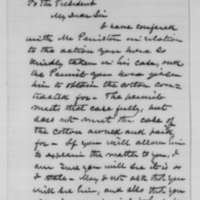
Vice President Hannibal Hamlin wrote to President Lincoln requesting that he expand the terms of the cotton permit for Fergus Peniston. The support of influential politicians and administration insiders was helpful for merchants seeking permission to…
Hanson A. Risley to John G. Nicolay, Friday, February 03, 1865 (Permit for Fergus Peniston)
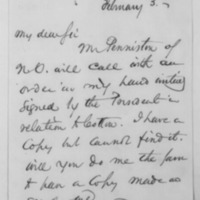
Treasury agent Hanson Risley wrote to Lincoln's private secretary John G. Nicolay requesting a copy of Fergus Peniston's cotton permit. Risley was a key figure in the wartime cotton trade and was later called to testify before Congress regarding…
Henderson's "Victory Vegetable Garden"
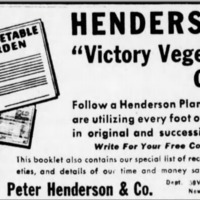
Advertisement listed in the Brooklyn Daily Eagle from Peter Henderson & Company, which was a New York City based seed distributer