Hell on Earth: Entering the Gates of Blackwell’s Island
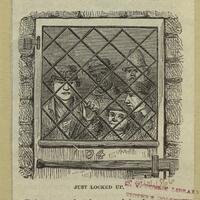
What did it take to get locked up on Blackwell's Island?
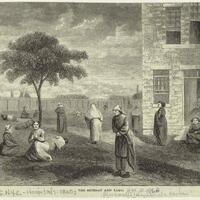
When New York City bought Blackwell’s Island (now Roosevelt Island) in 1828, it was a beacon of hope for believers in social reform. Progressive New Yorkers felt certain that the poor and mentally ill would get the treatment they deserved and that criminals, though incarcerated, would be treated humanely and given the opportunity for rehabilitation. That hopeful vision never aligned with the grim realities of life on Blackwell’s Island.
This project explores the circumstances and conditions of New Yorkers who found themselves at one of the institutions on Blackwell’s Island. What did it take to get locked up there? In exploring this question, this archive will provide a window into the diverse experiences of inmates on Blackwell’s Island.
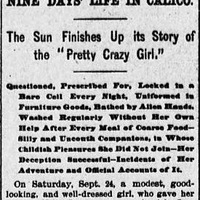
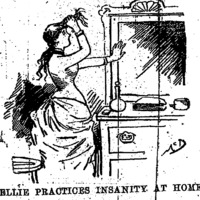
Investigative journalist Nellie Bly worked undercover on Blackwell’s Island, where she spent ten days at the female asylum, and then published a book, Ten Days in the Mad-House (1887), exposing the asylum’s wretched conditions. Her story is unusual because she feigned insanity and secured a quick release from the asylum; few were so lucky. It was also unusual because of her book’s momentous impact: bringing the conditions of Blackwell’s Island to the public’s attention and making those conditions a widespread public health concern.
Other documents in our item set reveal lesser known cases of inmates and patients on Blackwell’s Island, including Emily Graham, Jacob Stockvis, and Sister Mary Stanislaus. Many entered Blackwell’s Island under questionable circumstances, returning home from the Island in far worse condition than when they had arrived; many others died on the Island because of doctors’ abuse, incompetence, or neglect. 19th-century newspapers reported on such cases, often divulging disturbing and graphic details.
By exploring how these individuals entered, endured, and exited Blackwell’s Island in differing capacities, this project will serve as a resource for high school students, both as an archive of documents connected to Blackwell’s Island and as an arena for historical inquiry. By engaging with these documents, students unfamiliar with this chapter in New York City’s history will better understand the process of critical historical thinking as well as present-day concerns about the criminal justice system, the welfare state, and healthcare.