-
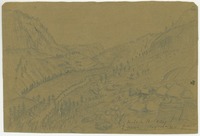 John Muir Hetch Hetchy drawing
 John Muir is well known for his role in the creation of the National Park System and the organization of the Sierra Club. His preservationist environmental philosophy informed his opposition to the creation of the Hetch Hetchy Reservoir, which was completed in 1923 with the help of conservationist-minded environmentalists. Conservationists argued that the reservoir was necessary to supply San Franciso with water, whereas Muir believed Hetch Hetchy Valley, drawn here by Muir, needed to be protected from this type of utility project, arguing that the environment need to be preserved for future generations to enjoy. Muir's white supremist and anti-Indigenous ideologies excluded many from his vision of who should be able to enjoy the parks.
-
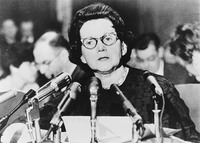 Environmentalist Authors
 Rachel Carson’s Silent Spring published in 1962 became one of the most influential environmental writings. The following year she was a speaker at a Senate Government Operations subcommittee hearing on the hazards of pesticide use. In her remarks, Carson argued that the problem of pesticides and other poisonous chemicals “must be resolved in our time.” Carson warned of the damage chemicals had already done to the environment and to all living things: “Contamination of various kinds has now invaded all of the physical environment that supports us — water, soil, air, and vegetation. It has even penetrated that internal environment within the bodies of animals and of men.” Silent Spring is one work within a body of literature by environmentalist authors, including Henry David Thoreau, Aldo Leopold, and others, who have increased public awareness of environmental concerns.
-
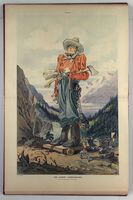 "The Dummy Homesteader"
 This cartoon from Puck published in 1909 satirizes business environmentalists who hid their interests in public lands behind the visage of rural homesteaders when, in reality, their interest in public lands were “power monopolists” and “land grifters” who were primarily interested in mineral and waterpower rights. Businessmen are depicted taking “fraudulent titles” from the “dummy homesteader.” In the following decades, rural homesteaders and local hunters attempted to hold wealthy elite recreationists accountable to wildlife conservation laws by writing editorials with a similar critique of elite misuse of resources for their own interests.
-
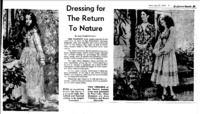 Back-to-the-Land
 This advertisement for peasant dresses in the May 27, 1970 San Francisco Chronicle capitalizes on the growing popularity, essentially among young people living in cities, of the “Back-to-the-Land” movement. The counterculture and environmental movements of the 1960s and 1970s led many to leave their lives in cities in search of more self-sufficient and environmentally friendly lifestyles. This advertisement suggests that anyone could be an environmentalist if they begin dressing in a particular way, “growing her own vegetables,” and “protecting the environment.” The advertisements references to Volkswagons and jobs “where straight clothes are required” target a specific group of white, middle-class San Franciscans. The threads of elitism within the back-to-the-land movement was a point of tension between this new group of environmentalists and rural homesteaders.
-
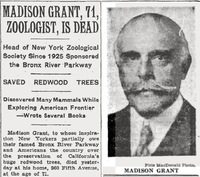 “Madison Grant, 71, Zoologist, Is Dead”
 New York Times obituary for Madison Grant, a prominent zoologist, conservationist, and eugenicist. Grant was one of many conservationists who espoused pseudo-scientific white supremacist ideas. The redwood tree preservation movement in particular drew the interest of well-known eugenicists such as Grant, Henry Fairfield Osborn, Charles Goethe, and Vernon Kellogg. Believing that the superior Nordic race would go extinct due to inbreeding with inferior blood lines, Grant served as the vice president of the Immigration Restriction League for many years. He also co-founded the Save the Redwoods League in 1918 and helped to create Glacier National Park and Denali National Park.
-
 Lois Marie Gibbs, Mother of the EPA Superfund
 Photograph of Lois Marie Gibbs decorating a Christmas tree trimmed with ornaments naming chemicals found in the Love Canal neighborhood of Niagara Falls, New York. A middle class housewife with no college education or political organizing background, Gibbs began her celebrated career in environmental activism in 1978 after discovering that her son’s elementary school was built on top of more than 20,000 tons of toxic chemical waste dumped by the Hooker Chemical Company. In her neighborhood of Love Canal, most children born in the 1970s had birth defects. Gibbs’ own children had been ill from birth and her son began having seizures once he started school. Gibbs went door to door petitioning for the closure of the school. As she spoke with neighbors and learned of their health problems, she formed a homeowner’s association and worked to have 810 Love Canal families evacuated, prompting the creation of the EPA’s Superfund program responsible for responding to environmental emergencies and cleanups. In 1981, Gibbs founded Clearinghouse for Hazardous Waste – later renamed to the Center for Health, Environment, and Justice – to help train and support grassroots organizations working to protect neighborhoods from exposure to hazardous wastes. Gibbs was nominated for the Nobel Peace Prize in 2003 and holds honorary degrees from several universities.
-
 Ford Motor Company–Glacier National Park Tourism Film
 Can private companies be environmentalists? “...And as you breathe in the bracing mountain air, you get a new grip on life,” says this 1939 tourist film just moments after describing the nearby Blackfeet Nation as a remnant of a historical past. The land on which Glacier National Park stands was stolen from the Blackfeet through a deal brokered by George Bird Grinnell, the founder of the Audubon Society. This calls into focus the ways in which private organizations and private companies–like the Ford Motor Company–have used environmentalist thinking to their own financial and commercial benefit, often to the detriment of those most impacted by their actions. As much as this film depicts the stunning terrain of Glacier National Park, it is more-so an advertisement for Ford vehicles. In 2022, we understand fossil fuels and fossil fuels emissions to be a leading cause of climate change. Here, Ford plays a sleight of hand in suggesting that their vehicles have some connection to the conservation of park lands. In contemporary terms, when a company misguides consumers into believing their product has a positive environmental impact, we call this “greenwashing.”
-
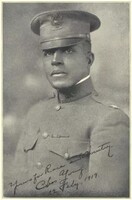 Captain Charles Young, First Black National Parks Superintendent
 National Parks are often heralded as important sites of land and wildlife conservation. Before the National Parks Service existed, the United States Army managed National Parks spaces. After fighting as Buffalo Soldiers in the Civil War, Brigadier General Charles Young and his troops were placed on duty at Sequoia National Park. Young was named Acting Superintendent, making him the first Black person in a National Parks leadership role--and at a time when the National Parks were still segregated. As Superintendent, Young completed numerous infrastructure projects like blazing the summit trail to Mount Whitney. This photograph, inscribed by Young, says “Yours for Race and Country, Chas. Young 22, July 1919.” Without minimizing Young’s contributions to the National Parks, we must also consider that the creation of Sequoia National Park displaced the Mono (Monache), Yokuts, Tübatulabal, Paiute, and Western Shoshone peoples from their homelands. We should additionally question why the United States believed it needed armed forces to manage parklands, and whose interests Young’s activities truly served.
-
 Youth Trainees at the People for Community Recovery
 A photograph of the People for Community Recovery’s Youth Environmental Training Program participants. Founded in 1979 by environmental justice leader Hazel M. Johnson, the People for Community Recovery (PCR) is a community-led organization that promotes environmental sustainability and safety in Chicago’s South Side neighborhoods. PCR’s work has been at the center of a decades-long grassroots movement to protect Chicago’s Black communities from environmental toxins. PCR’s youth training program gained national recognition in 1992 when Johnson was awarded the President's Environment and Conservation Challenge Award. President George H. W. Bush commended PCR’s founder for “cultivating our human resources to conserve our natural ones,” harkening back to Progressive-era conservation ethics while sidestepping the issue of environmental racism at the heart of PCR’s work.
-
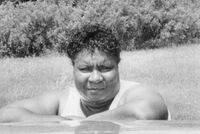 Hazel M. Johnson, Mother of Environmental Justice
 A photograph of Hazel M. Johnson, recognized as “the mother of environmental justice” for her local activism in response to the impact of environmental hazards on a community of Chicago public housing residents as well as work at the federal level against environmental racism. Following the death of her husband from cancer in 1969, Johnson began surveying and documenting her neighbors’ chronic health problems and the poor maintenance of her housing complex. Johnson agitated for accountability from the Chicago Housing Authority, leading to water testing that found that the building’s drinking water was contaminated. In 1979, Johnson founded the People for Community Recovery, spawning a grassroots movement to protect public housing residents from environmental toxins. Johnson entered the national stage in the 1990s when she was awarded the President's Environment and Conservation Challenge Award in recognition of her advocacy work, joined a team of activists in fighting for the 1994 Environmental Justice Executive Order, and worked with Al Gore on his environmental platform.
-
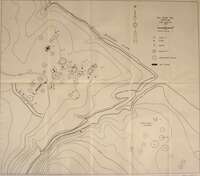 The Dodd Site, Oahe Reservoir
 Decades before citizens of the Standing Rock Sioux Tribe and their allies gathered to protect the waters of the Missouri river valley from the construction of the Dakota Access Pipeline, the Standing Rock reservation was threatened by the creation of the Oahe dam in 1948 by the United States Army Corps of Engineers. The Oceti Sakowin (Očhéthi Šakówiŋ) tens of thousands of acres of their lands and important historical and cultural sites which were flooded by the Oahe reservoir when the dam was completed. Prior to the construction of the dam, archaeologists mapped and excavated many of the Oceti Sakowin’s sacred sites. The Oceti Sakowin continue to fight for their sovereignty and to protect the lands and waters of their homelands.
-
 Sunrise Movement Sit-in
 The Sunrise Movement is a multi-class, multi-racial youth-led political action organization focused on questions of environmental justice and climate change. The Sunrise Movement calls into question who can be an environmentalist; they show that young people–as much as adults–have the power to make significant change. A major initiative of the Sunrise Movement is supporting the Green New Deal–a public policy which addresses climate change all while creating jobs in the renewable energy industry. On December 10, 2018, the Sunrise Movement staged numerous sit-ins inside of Congressional representatives’ offices. A year after this sit-in, Representative Alexandria Ocasio-Cortez introduced House Resolution 109 naming the duty of the Federal Government to create a Green New Deal. While the Green New Deal has yet to be wholly adopted, it has influenced the Biden administration’s approach to climate change policy.
-
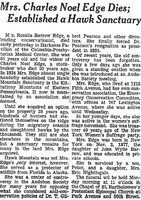 Obituary for Rosalie Barrow Edge, AKA “Mrs. Charles Edge”
 Rosalie Barrow Edge’s obituary reveals the motivations of wealthy urbanites’ involvement in the Progressive Era conservation movement: preservation by way of privatization–not through collective collaboration or government intervention. Barrow Edge became a noted conservationist upon purchasing 1,340 acres of land near Kempton, Pennsylvania. The land was previously a favored place for rural hunters to shoot hawks. On her newly purchased land, Edge formed the Hawk Mountain Sanctuary, the world's first private preserve for birds of prey. Barrow Edge’s obituary also shows how would-be allies in the early conservation movement were sometimes at odds with one another. Barrow Edge fought with the Audubon Society over their policies which allowed for the killing of predator animals.
-
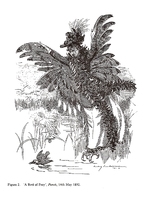 “A bird of prey" Illustration
 Cartoon by Edward Linley Sambourne (1844-1910) published in Punch Magazine in 1892 depicts a woman adorned with a feathered hat inhabiting the body of a forbidding predator bird that looms over a smaller bird. The bird plume fashion trend, which emerged in the 1860s, coincided with increased attention to bird protection among conservationists who had grown concerned over the extinction of certain avian species. The founding of the Nuttall Ornithological Club in 1873, the American Ornithological Union in 1883, and the Audubon Society in 1886 led to increased bird protection activism and legislation. In their crusade against feathered garments, and the millinery industry in particular, bird activists made fashionable women the target of their campaigns. Indeed, the inaugural lecture of the Audubon Society delivered by ornithologist Frank M. Chapman was titled “Woman as a Bird Enemy.'' This cartoon demonstrates how conservationist circles leveraged misogynistic imagery to scapegoat women.
-
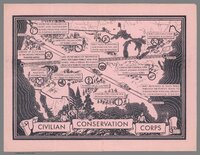 Civilian Conservation Corps Pictorial Map
 The Civilian Conservation Corps (CCC), a Great Depression era federal relief program, provided men with jobs focused on environmental protection. This work included building national parks; clearing forests for wildfire control; and maintaining access roads. The Corps segregated units by race, and it further excluded women and Indigenous people from participation. The United States Army supported the CCC by transporting workers across the country. In 1933, the CCC deployment was the largest peacetime mobilization of the Army in US history. This map demonstrates some of the CCC’s work–much of which still impacts us today. Some activities, like planting trees, might resonate with contemporary ideas of conservation. Activities, like laying telephone lines, call into question how much conservation the Corps was actually undertaking. The map also demonstrates the patriarchal and nationalistic undertones of the Corps through the images of shirtless men and the use of militaristic language like “operations.”