-
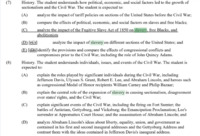 Chapter 113. Texas Essential Knowledge and Skills for Social Studies Subchapter B. Middle School Pages 16
 Screenshot from the Texas TEKS approved for 2024-2025. Page 16 covers the knowledge and skills section for 8th graders in social studies. It is important to know that students cover slavery and emancipation mostly in 7th and 8th grade.
-
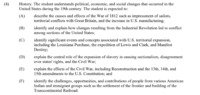 Chapter 113. Texas Essential Knowledge and Skills for Social Studies Subchapter A. Elementary Page 24
 Screenshot from the Texas TEKS approved for 2024-2025. Page 24 has the only mention of slavery in the text, which discusses the knowledge and skills to be developed in Grade 5.
-
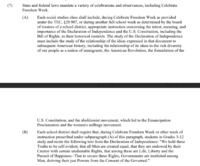 Chapter 113. Texas Essential Knowledge and Skills for Social Studies Subchapter A. Elementary Pages 12-3
 Screenshot from the Texas TEKS approved for 2024-2025 which state that the Emancipation Proclamation is slated to be discussed from 3-8th grade during Celebrate Freedom Week which falls on whichever week Sept. 17 falls on. This week, which was established in 2001, works to help students understand the importance of the Declaration of Independence and the U.S. Constitution which was signed on September 17, 1787. However, now the state promotes including the relationship of freedom to "the rich diversity of our people as a nation of immigrants" and the abolitionist movement, which led to the Emancipation Proclamation .
-
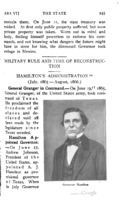 A History of Texas for Schools: Also for General Reading and for Teachers Preparing Themselves for Examination
 This textbook offers episodic narratives and illustrations of major events in Texas history beginning with European colonization through the turn of the 20th century. In addition to social history, the book includes descriptions of Texas landscapes and natural resources, and brief summaries of the histories of Texas counties. It also includes biographies of varying lengths for historical figures (majority Anglo American men) who were identified as prominent contributors to the political, economic, and social development of Texas. Pages 245-46 mention the events of June 19, 1865 and describe the governor's efforts to discourage recently emancipated people from leaving and encourage them to stay with their former enslavers.
-
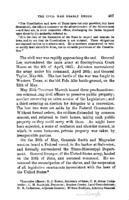 A Pictorial History of Texas Page 407
 This textbook discusses the history of the state, beginning from the earliest visits of European adventurers to A.D. 1883. It embraces the periods of missions and colonization and tracks the formation of the country and state of Texas. Additionally, it provides a description of the country’s topography. The book includes sketches of leading historical figures along with descriptions and statistics of the state’s public institutions. These page discuss the war and emancipation.
-
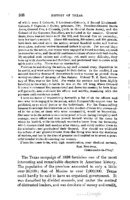 A Pictorial History of Texas Pages 268-71
 This textbook discusses the history of the state, beginning from the earliest visits of European adventurers to A.D. 1883. It embraces the periods of missions and colonization and tracks the formation of the country and state of Texas. Additionally, it provides a description of the country’s topography. The book includes sketches of leading historical figures along with descriptions and statistics of the state’s public institutions. These pages discuss the war and emancipation.
-
 A History of Texas for Schools: Also for General Reading and for Teachers Preparing Themselves for Examination
 This textbook offers episodic narratives and illustrations of major events in Texas history beginning with European colonization through the turn of the 20th century. In addition to social history, the book includes descriptions of Texas landscapes and natural resources, and brief summaries of the histories of Texas counties. It also includes biographies of varying lengths for historical figures (majority Anglo American men) who were identified as prominent contributors to the political, economic, and social development of Texas. Page 333 is the only time the word emancipation comes up in the book, and only as a note.
-
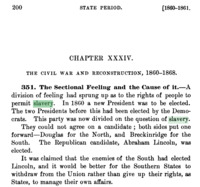 A Condensed History of Texas for Schools Page 200
 In this textbook, John and Mary Brown offer a narrative of Texas history beginning with European colonization in 1492, followed by the periods of Spanish colonization and Indigenous genocide; Mexican independence; American colonization and the introduction of slavery; the Texas war for independence; the Republic era; the first U.S. statehood era; the Confederate era and Civil War; Reconstruction; and recent events through 1895, the year of the book’s publication. The book includes notes for teachers and suggestions for students’ rote memorization of content. It is relevant to our archive because of the Browns’ Lost Cause narrative, glorification of the Confederate army, and its lack of information regarding the emancipation of enslaved people in Texans.
-
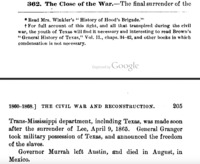 A Condensed History of Texas for Schools Pages 204-5
 In this textbook, John and Mary Brown offer a narrative of Texas history beginning with European colonization in 1492, followed by the periods of Spanish colonization and Indigenous genocide; Mexican independence; American colonization and the introduction of slavery; the Texas war for independence; the Republic era; the first U.S. statehood era; the Confederate era and Civil War; Reconstruction; and recent events through 1895, the year of the book’s publication. The book includes notes for teachers and suggestions for students’ rote memorization of content. It is relevant to our archive because of the Browns’ Lost Cause narrative, glorification of the Confederate army, and its lack of information regarding the emancipation of enslaved people in Texans.
-
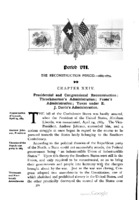 A Complete History of Texas for Schools, Colleges, and General Use Pages 372-7
 In this textbook, Dudley G. Wooten provides a narrative of Texas history from the beginning of European colonization in 1492, followed by the periods of Spanish colonization and Indigenous genocide; Mexican independence; American colonization and the introduction of slavery; the Texas war for independence; the Republic era; the first U.S. statehood era; the Confederate era and Civil War; Reconstruction; and recent events through 1899, the year of the book’s publication. Its relevance to our archive lies in Wooten’s minimal discussion of emancipation of enslaved people in 1865, disapproval of Reconstruction, and downplaying the Ku Klux Klan’s activities in Reconstruction Texas.
-
 U.D.C. Catechism for Children arranged for the Veuve Jefferson Davis Chapter U.D.C. Galveston, Texas
 This United Daughters of the Confederacy (UDC) Catechism for Children was written by Cornelia Branch Stone and distributed to several UDC chapters in Texas and Virginia. It provides a Lost Cause interpretation of the American Civil War (1861–1865) through a question-and-answer format intended for rote memorization.
-
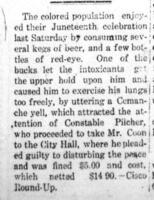 Report on Juneteenth celebration, The Carbon News
 Weekly newspaper from Carbon, Texas that includes local, state, and national news along with advertising. This article…
-
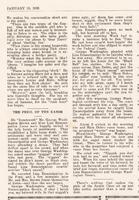 The Peril of the Razor
 The Tivy Tattler was a bimonthly newsletter published by the student body at Tivy High School in Kerrville, discussing news, events, and other topics of interest to readers. This short story …
-
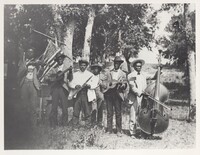 Emancipation Day Celebration band, June 19, 1900
 Black and white 8 x 10 in. photograph of African-American band at Emancipation Day celebration, June 19, 1900, held in "East Woods" on East 24th Street in Austin. Mrs. Grace Murray Stephenson kept a diary of the day's events, which she later sold to the San Francisco Chronicle, which wrote a full-page feature on it.
-
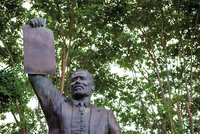 Statue of late state Rep. Al Edwards
 Statue of late state Rep. Al Edwards, outside Ashton Villa, introducing a bill to formally acknowledge Emancipation Day as a state holiday.
-
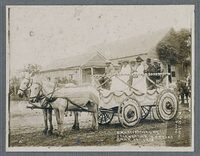 Carriage Decorated for Emancipation Day
 Carriage for Emancipation Day Celebration in Corpus Christi
-
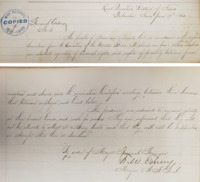 General Order # 3
 Order that came out two years after Lincoln's Emancipation Proclamation informing people that slaves were free.
It reads: The people of Texas are informed that, in accordance with a proclamation from the Executive of the United States, all slaves are free. This involves an absolute equality of personal rights and rights of property between former masters and slaves, and the connection heretofore existing between them becomes that between employer and hired labor. The freedmen are advised to remain quietly at their present homes and work for wages. They are informed that they will not be allowed to collect at military posts and that they will not be supported in idleness either there or elsewhere.
-
 The 1836 Project: Telling the Texas Story (Pamphlet)
 In 2021, the 87th Texas Legislature passed House Bill 2497, which established The 1836 Project “as an advisory committee to promote patriotic education and increase awareness of the Texas values that continue to stimulate boundless prosperity across this state.” This pamphlet communicates the project’s mission and the historical narratives that it seeks to proliferate in Texas public education.
-
 Children marching in a Juneteenth parade, Galveston, Texas
 This photo shows children marching in a Juneteenth parade on June 19, 1991 in Galveston, TX. Juneteenth received official recognition by the state of Texas in 1980 and was made a national holiday in 2021, but Black communities have commemorated their emancipation from enslavement since they first received the news from General Gordon Granger on June 19, 1865 in Galveston.
For over 100 years before any validation from the state or federal governments, Black communities in and beyond Texas organized community gatherings where young generations learned much more acutely about the history of slavery and emancipation from their elders’ collective memories and oral histories than was being taught in public schools.