-
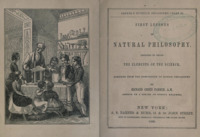 First Lessons in Natural Philosophy: Designed to Teach the Elements of the Science.
 During the 19th century, parents and educators debated over the type of scientific training that female students should receive. After the Revolution, girl’s textbooks changed, and they went from offering training in “domestic science”—that to be applied for domestic tasks such as cooking—to “pure science,” by the 1850's. Parents understood that domestic science was something their daughters could learn at home. Pure science, instead, was believed to be a tool to strengthen the female character and stimulate morale and mental discipline. This type of knowledge, in turn, would better prepare them for motherhood.
This source shows the cover page of a book by Richard Green Parker. It is an example of a textbook offering training in “pure science” from an early age. In it, both girls and boy are depicted as students of the scientific discipline. This would drastically change by the turn of the 20th century, when science became a subject exclusively targeted towards boys in both textbooks and popular culture.
-
 Women of the Future Will Make the Moon a Cleaner Place to Live
 This 1968 advertisement shows a woman in a futuristic astronaut-like space suit. The woman pictured in the image is holding a cleaning product, and the accompanying caption reads: “Women of the future will make the Moon a cleaner place to live.” During the 1960’s, women typically were expected to assume the role of homemakers. This notion was not only encouraged through the educational programs offered at the time, but also strengthened by depictions in popular culture. This was also the time when the “space race” between the United States and the Soviet Union was taking place. This image depicts a possible future of life on the Moon, but where stereotyped gender roles remain unchanged. Instead of being professional scientists or astronauts of the future, in this advertisement women are destined to be housewives.
-
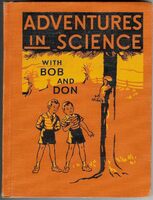 Adventures in Science with Bob and Don
 After World War II, science provided professional opportunities for men, for example, as engineers. In addition, certain beliefs of the time enforced the idea that women belonged to a separate sphere than men. This rhetoric strengthened the notion that female and male capabilities were different, and women should be committed to their homes. In this way, science became linked to boys. “Adventures in Science with Bob and Don,” is a book of scientific education. As can be observed in its title and cover illustration, the book is targeted to boys, and science is characterized as an outdoor adventure, a sphere that belonged to the male gender.
-
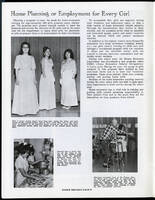 Home Planning or Employment for Every Girl
 By 1960, the growing backlash against women entering the workforce reached its peak. By then, the number of women receiving advanced degrees in science was at an all-time low. After World War II, educational curricula offered to girls and boys was differentiated by gender, in order to prepare them for their potential vocational futures.
This school newspaper publication from 1966 provides information about the type of education that was targeted to female students during that era. The source provides evidence of what was considered to be an academic program better suited for female students. In order to become future homemakers or find employment, these students were offered courses such as cooking, sewing, and child care training.
-
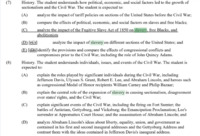 Chapter 113. Texas Essential Knowledge and Skills for Social Studies Subchapter B. Middle School Pages 16
 Screenshot from the Texas TEKS approved for 2024-2025. Page 16 covers the knowledge and skills section for 8th graders in social studies. It is important to know that students cover slavery and emancipation mostly in 7th and 8th grade.
-
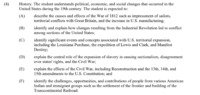 Chapter 113. Texas Essential Knowledge and Skills for Social Studies Subchapter A. Elementary Page 24
 Screenshot from the Texas TEKS approved for 2024-2025. Page 24 has the only mention of slavery in the text, which discusses the knowledge and skills to be developed in Grade 5.
-
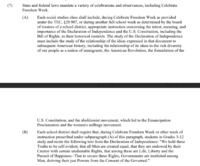 Chapter 113. Texas Essential Knowledge and Skills for Social Studies Subchapter A. Elementary Pages 12-3
 Screenshot from the Texas TEKS approved for 2024-2025 which state that the Emancipation Proclamation is slated to be discussed from 3-8th grade during Celebrate Freedom Week which falls on whichever week Sept. 17 falls on. This week, which was established in 2001, works to help students understand the importance of the Declaration of Independence and the U.S. Constitution which was signed on September 17, 1787. However, now the state promotes including the relationship of freedom to "the rich diversity of our people as a nation of immigrants" and the abolitionist movement, which led to the Emancipation Proclamation .
-
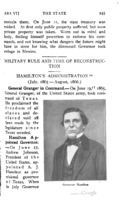 A History of Texas for Schools: Also for General Reading and for Teachers Preparing Themselves for Examination
 This textbook offers episodic narratives and illustrations of major events in Texas history beginning with European colonization through the turn of the 20th century. In addition to social history, the book includes descriptions of Texas landscapes and natural resources, and brief summaries of the histories of Texas counties. It also includes biographies of varying lengths for historical figures (majority Anglo American men) who were identified as prominent contributors to the political, economic, and social development of Texas. Pages 245-46 mention the events of June 19, 1865 and describe the governor's efforts to discourage recently emancipated people from leaving and encourage them to stay with their former enslavers.
-
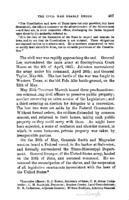 A Pictorial History of Texas Page 407
 This textbook discusses the history of the state, beginning from the earliest visits of European adventurers to A.D. 1883. It embraces the periods of missions and colonization and tracks the formation of the country and state of Texas. Additionally, it provides a description of the country’s topography. The book includes sketches of leading historical figures along with descriptions and statistics of the state’s public institutions. These page discuss the war and emancipation.
-
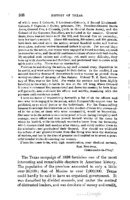 A Pictorial History of Texas Pages 268-71
 This textbook discusses the history of the state, beginning from the earliest visits of European adventurers to A.D. 1883. It embraces the periods of missions and colonization and tracks the formation of the country and state of Texas. Additionally, it provides a description of the country’s topography. The book includes sketches of leading historical figures along with descriptions and statistics of the state’s public institutions. These pages discuss the war and emancipation.
-
 A History of Texas for Schools: Also for General Reading and for Teachers Preparing Themselves for Examination
 This textbook offers episodic narratives and illustrations of major events in Texas history beginning with European colonization through the turn of the 20th century. In addition to social history, the book includes descriptions of Texas landscapes and natural resources, and brief summaries of the histories of Texas counties. It also includes biographies of varying lengths for historical figures (majority Anglo American men) who were identified as prominent contributors to the political, economic, and social development of Texas. Page 333 is the only time the word emancipation comes up in the book, and only as a note.
-
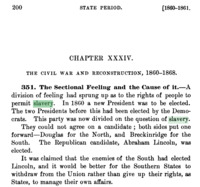 A Condensed History of Texas for Schools Page 200
 In this textbook, John and Mary Brown offer a narrative of Texas history beginning with European colonization in 1492, followed by the periods of Spanish colonization and Indigenous genocide; Mexican independence; American colonization and the introduction of slavery; the Texas war for independence; the Republic era; the first U.S. statehood era; the Confederate era and Civil War; Reconstruction; and recent events through 1895, the year of the book’s publication. The book includes notes for teachers and suggestions for students’ rote memorization of content. It is relevant to our archive because of the Browns’ Lost Cause narrative, glorification of the Confederate army, and its lack of information regarding the emancipation of enslaved people in Texans.
-
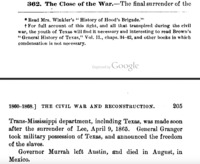 A Condensed History of Texas for Schools Pages 204-5
 In this textbook, John and Mary Brown offer a narrative of Texas history beginning with European colonization in 1492, followed by the periods of Spanish colonization and Indigenous genocide; Mexican independence; American colonization and the introduction of slavery; the Texas war for independence; the Republic era; the first U.S. statehood era; the Confederate era and Civil War; Reconstruction; and recent events through 1895, the year of the book’s publication. The book includes notes for teachers and suggestions for students’ rote memorization of content. It is relevant to our archive because of the Browns’ Lost Cause narrative, glorification of the Confederate army, and its lack of information regarding the emancipation of enslaved people in Texans.
-
 A Complete History of Texas for Schools, Colleges, and General Use Pages 372-7
 In this textbook, Dudley G. Wooten provides a narrative of Texas history from the beginning of European colonization in 1492, followed by the periods of Spanish colonization and Indigenous genocide; Mexican independence; American colonization and the introduction of slavery; the Texas war for independence; the Republic era; the first U.S. statehood era; the Confederate era and Civil War; Reconstruction; and recent events through 1899, the year of the book’s publication. Its relevance to our archive lies in Wooten’s minimal discussion of emancipation of enslaved people in 1865, disapproval of Reconstruction, and downplaying the Ku Klux Klan’s activities in Reconstruction Texas.
-
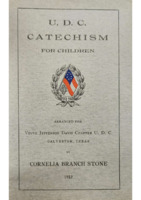 U.D.C. Catechism for Children arranged for the Veuve Jefferson Davis Chapter U.D.C. Galveston, Texas
 This United Daughters of the Confederacy (UDC) Catechism for Children was written by Cornelia Branch Stone and distributed to several UDC chapters in Texas and Virginia. It provides a Lost Cause interpretation of the American Civil War (1861–1865) through a question-and-answer format intended for rote memorization.
-
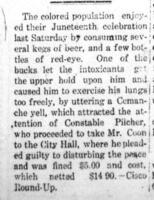 Report on Juneteenth celebration, The Carbon News
 Weekly newspaper from Carbon, Texas that includes local, state, and national news along with advertising. This article…
-
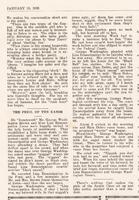 The Peril of the Razor
 The Tivy Tattler was a bimonthly newsletter published by the student body at Tivy High School in Kerrville, discussing news, events, and other topics of interest to readers. This short story …
-
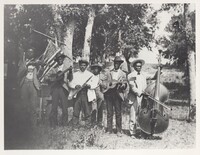 Emancipation Day Celebration band, June 19, 1900
 Black and white 8 x 10 in. photograph of African-American band at Emancipation Day celebration, June 19, 1900, held in "East Woods" on East 24th Street in Austin. Mrs. Grace Murray Stephenson kept a diary of the day's events, which she later sold to the San Francisco Chronicle, which wrote a full-page feature on it.
-
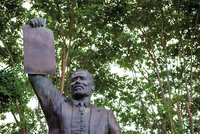 Statue of late state Rep. Al Edwards
 Statue of late state Rep. Al Edwards, outside Ashton Villa, introducing a bill to formally acknowledge Emancipation Day as a state holiday.
-
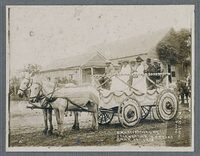 Carriage Decorated for Emancipation Day
 Carriage for Emancipation Day Celebration in Corpus Christi
-
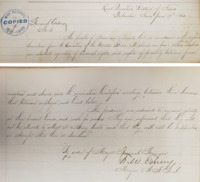 General Order # 3
 Order that came out two years after Lincoln's Emancipation Proclamation informing people that slaves were free.
It reads: The people of Texas are informed that, in accordance with a proclamation from the Executive of the United States, all slaves are free. This involves an absolute equality of personal rights and rights of property between former masters and slaves, and the connection heretofore existing between them becomes that between employer and hired labor. The freedmen are advised to remain quietly at their present homes and work for wages. They are informed that they will not be allowed to collect at military posts and that they will not be supported in idleness either there or elsewhere.
-
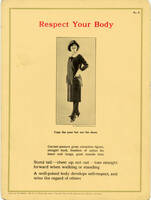 Respect Your Body
 The American Social Health (originally “Hygiene”) Association (ASHA) was established in 1913 at a professional public health conference in Buffalo, New York. Its initial purpose was to combat the rampant cases of venereal disease in the nation’s military. As American men returned home from fighting in Europe’s trenches of World War I, they brought with them high numbers of syphilis and gonorrhea. During the interwar years, the ASHA’s purpose expanded to include public education about what was, according to these experts, the relationship between individual health and high moral standards. To support this purpose, the ASHA aimed to prevent venereal disease, sex work, and drug addiction in New York through educational, legal, and medical measures.
This poster, which was created as part of their sexual hygiene educational campaign as disseminated through printed materials. In the poster, we see a young woman standing fitted in a dress and hat. The text below instructs young women to "stand tall" like the woman depicted in the picture. The text also reads, "A well-poised body develops self-respect, and wins the regard of others." This instructional poster was targeted toward girls and young women and fits in line with the American Social Hygiene Association's objective of linking moral standards such as "self-respect" through physical presentation and grooming.
-
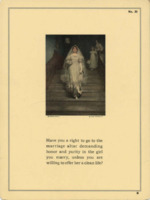 Don't Demand Purity Unless You Offer It
 The American Social Health (originally “Hygiene”) Association (ASHA) was established in 1913 at a professional public health conference in Buffalo, New York. Its initial purpose was to combat the rampant cases of venereal disease in the nation’s military. As American men returned home from fighting in Europe’s trenches of World War I, they brought with them high numbers of syphilis and gonorrhea. During the interwar years, the ASHA’s purpose expanded to include public education about what was, according to these experts, the relationship between individual health and high moral standards. To support this purpose, the ASHA aimed to prevent venereal disease, sex work, and drug addiction in New York through educational, legal, and medical measures.
Arguably, their most successful campaign was the production and proliferation of printed materials related to social hygiene. This poster confronts young men with questions of purity, honor, and cleanliness as euphemisms for sexually transmitted disease. From the perspective of these experts, the only women who engaged in sex outside of marriage were sex workers, whom society regarded not only as “dirty” and “impure”, but, moreover, the source of venereal disease. Therefore, if a man engaged in sex outside of marriage, he inherently ran the risk of contracting a sexual infection. Lest a young man be tempted into sex before marriage, this poster, which notably assumes the heterosexuality of its male reader, urges him to consider his future bride. A man who exposed an innocent girl to venereal disease through marriage, experts argued, made him nothing more than a hypocrite and an immoral crook.
Posters such as this one were created by the public health experts of the ASHA to serve as a teaching tool. Educators and parents could utilize this poster to visually and simply inform the young people in their care about a wide variety of uncomfortable and awkward topics, such as hygiene, sexually transmitted infections, abstinence, marriage, and puberty.
-
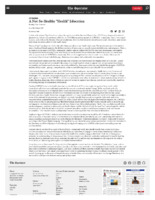 A Not-So-Healthy “Health” Education by Shreya Paul
 In this 2019 article, Shreya Paul, a student at Stuyvesant High School in lower Manhattan, criticizes her school's health curriculum for its lack of LGBTQIA+ representation. Citing legislation in California, Iowa, Colorado, and Washington D.C. mandating LGBTQIA+ inclusive education, Paul calls for similar a state law in New York, arguing that current curricula stigmatizes non-heterosexual or cis-gender students and fails to provide them with adequate information about sexual health practices. Paul's article reflects an increasing sexuality and gender diversity among New York City teens and young adults and indicates a need for a sexual education curriculum that meets the needs of its LGBTQIA+ students.
-
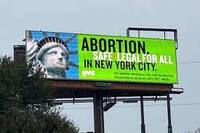 Free Abortion for All. Advertisement for NYC Health + Hospitals Abortion Access Hub Virtual ExpressCare. October 2023.
 In the lead up to the overturn of the landmark decision of Roe v. Wade on the eve of its 50th anniversary, New York state’s 57th governor Kathy Hochul signed a nation-leading legislative package to immediately protect the rights of patients and empower reproductive healthcare providers in anticipation of a final decision by the Supreme Court on abortion access. These packages were signed into law in June 2022, titled Comprehensive Six-Bill Package Protects Both Patients and Providers in Anticipation of Final Decision by Supreme Court on Dobbs v. Jackson.
More recently in New York City, Mayor Eric Adams and NYC Health + Hospitals – New York city’s cross-borough governmental healthcare system – launched the country’s first telehealth abortion access program through Virtual ExpressCare where patients in New York City seeking abortion care can connect with a New York state-licensed health care professional by video or phone, on-demand, for an assessment and counseling.
Commemorating the program’s official launch on October 2, 2023 Mayor Adams asserted that "Today, I am proud to announce another first for any city government: Access to abortion care will now be available through telehealth visits at NYC Health + Hospitals sites from the comfort of one's home. In New York City, we will never stop fighting for a woman's right to choose the care that is right for them, and we will never stop working to make abortion care more accessible to all New Yorkers”. The advertisement of this program can be seen displayed on LinkNYC kiosks, billboards across the city, and virtual ads on third party websites. Accessibility to healthcare in 2023, according to New York’s leading politicians, includes equitable access to abortion care and birth control.