-
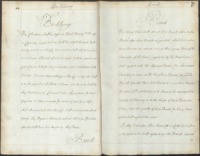 Law concerning bondslavery
 Law outlining New York practices of bondslavery. A new transcription is also attached.
-
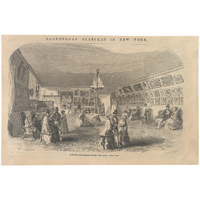 Gurney's Daguerrean Saloon - Broadway, New York
 This print depicts men and women in the lobby or Saloon area of Jeremiah Gurney’s gallery an excerpt from the corresponding article states “To spend an afternoon in inspecting the extensive portrait galleries of the daguerrean [sic] rooms of the city is beginning to be classed among the amusements of New York." This showcases the leisure of upper class society that was later class intergrated as women from the lower class spheres started to enjoy these elite forms of leisure
-
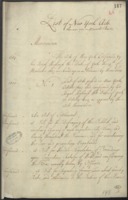 List of New York acts
 Manuscript memo from William Burnet containing a list of New York laws during the early English Colonial Period
-
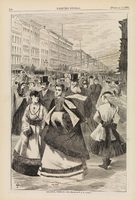 Broadway
 This image Entitled “Broadway” depicts two seemingly upper class women walking together through a crowded street. The women are wearing multiple pieces of contemporary fashion in the image showcasing not only independence, with women walking without men but also showcases consumerism in women during the 19th century
-
 Patent of Francisco for land on Manhattan Island
 In New Amsterdam, free African people could own land.
Take for example this document depicting a sale of Manhattan Land from Willem Kieft to a man named Willem Kieft. Was there a particular reason for why Francisco might have bought land near another African person in a settlement where there were so few?
"We, Willem Kieft, etc... have given and granted to Francisco Negro a certain piece of land located on the island of Manhattan bounded on the north by Gerrit Hendricksz and on the south by Antony Congo, Negro; its length along the public road is 200 paces, and its breadth 335 paces, with the express conditions etc...
Done at Fort Amsterdam in New Netherland, 25 March 1647."
Translation: Gehring, C.
-
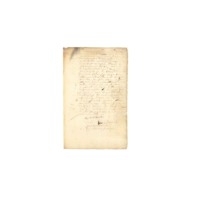 Manumission of Manuel the Spaniard by Philip Jansz Ringo
 What was the price of freedom in New Amsterdam?
For Philip Jansz Ringo, an enslaved African man it was 300 guilders. For context, only 23 years earlier Pieter Schagen had infamously bought the island of Manhattan for 60 guilders or $23 in today's money!
"Before me, Cornelis van Tienhoven, secretary of New Netherland, appeared Philip Jansz Ringo, who declared that of his own free will he released and liberated from servitude and slavery , as he hereby does [ release and liberate ], Manuel the Spaniard, promising that he shall nevermore molest him on account thereof, provided that the above named Manuel promises to pay the aforesaid Philip Jansen or his heirs for said freedom the sum of three hundred Carolus guilders within the term of three consecutive years, one hundred guilders on the 15th of February of each year during the three years and no longer, in seawan, grain or such pay as is current here and can be raised by him, Manuel. For the fulfilment of this contract he, Manuel, binds his person and, in case he fail in the payment, Philip Jansz shall have power to reclaim and command him as bond-slave, as if this had never been executed. But in case of payment as above mentioned, Philip Jansz shall, as he hereby does, relinquish all right of ownership. In testimony whereof this is signed this 17th of February 1649 in New Amsterdam, New Netherland.
Philip Yansen
Manuel
Johannes Rodenborch"
Translated by:
Scott, K., & Stryker-Rodda, K. (Ed.)
-
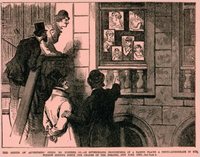 The Genius of Advertising
 This image entitled “The Genius of Advertising” depicts men looking through a window with pictures of women, the implication that this Image is representing a brothel in Soho during the point where the intermingling of upper class men and lower class women as lower Manhattan became a sort of red light district allowing Lower class women to make money.
-
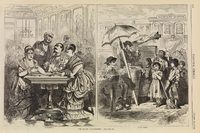 Up Among the Nineties
 This image created by Thomas Hogan for the Harper’s Weekly is entitled “Up Among the Nineties” depicts the class inequality that was on the rise in then 19th century. The left side shows upper class women with the caption “in Broadway” while the right side of the image shows Poverty stricken citizen with the caption “In Bowery”.
-
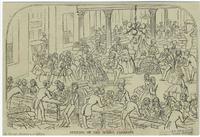 Opening of The Spring Fashions
 This still image portrays women and men attending the opening of a fabric store. Many of the consumers are women who helped propel and popularize consumer culture throughout New York City for women of all class statuses.
-
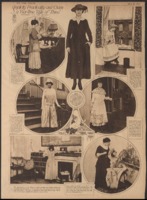 Image 2 of New-York tribune (New York [N.Y.]), May 20, 1917
 A page from the New-York Tribune newspaper (New York [N.Y.]), May 20, 1917, with fashion advertisement describing new more comfortable clothes for women titled "Simplicity, Practicality, and Charm a War-Time "Rule of Three".
-
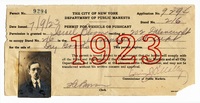 PUSHCART PERMIT
 Permit for Israel Bloom to operate a dry goods pushcart at the Havemeyer market in Brooklyn, New York.
-
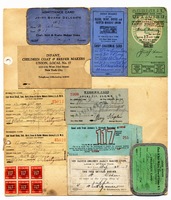 UNION CARDS
 Union cards belonging to Max Cohen, a garment worker, New York City.
-
 Well, We Showed Them
 Clara Lemlich was a factory girl who lived in New York City in the early nineteen hundreds. Lemlich recognized the unsanitary working conditions that many women were subject to in factories and vowed to make a difference. This movie provides a look at Lemlich's life and her active involvement in the "Garment Workers Strike of 1909" and how she inspired other activists to fight for their cause leaving a lasting impression on America's labor industry.
-
Becoming American: Jewish Women Immigrants 1880-1920 (article excerpt)
Article excerpt
They don't wear wigs here'. These were Yekl's words of greeting to his wife, Gitl, rejecting her protestations that she wanted to spruce 'herself up for the big event' - on her arrival in America in Abraham Cahan's story of Yekl, A Tale of the New York Ghetto (1896). At the end of her long journey from Russia, Gitl puts on the sheitel (wig) not only to honour the Sabbath but to celebrate her long-awaited reunion with Yekl. The symbolism, however, is lost on her Americanised husband. During their three-year separation, he has frantically embraced the customs of his new home, changing his name to Jake and rejecting his heritage. The image of his bewigged wife is a painful reminder of the past he is trying to forget. From the moment that Gitl steps off the boat at Ellis Island, Jake begins his relentless criticism of her dowdy appearance. Much of this anger is directed towards Gitl's 'voluminous wig of a pitch-black hue'.
In both their oral and written accounts, turn-of-the-century immigrants reported that American clothing and appearance were among the first symbols they adopted as a sign of cultural intermingling. Wearing fashionable clothing was second in importance only to learning English in their quest to become American. Indeed, some prospective emigres, after hearing about the differences in American styles from friends and relatives, began to make sartorial adjustments even before they left Eastern Europe. Mary Antin described the significance of this gesture in her autobiographical novel, The Promised Land, (Boston, 1912) Mashke's father who has come to America, writes to his wife in Russia urging her to 'leave her wig in Polotzk' when she comes to the New World as a 'first step of progress'. And Rose Cohen wrote that her aunt brought her a 'very pretty pair of black patent-leather slippers' to be worn when she arrived on American soil because 'shoes more than any other article of clothing showed the 'greenhorn'.
Other immigrants confirmed that they did not have to wait until they reached American soil to discover either the appeal or the power of American fashion. In letters sent back to the 'old country', relatives and friends spread the gospel of a new clothing consciousness. When Joe Braufmann of Lehr, North Dakota wrote to his mother-in-law Riva Lazar in Romania, he made it perfectly clear that things were different in America:
I want to inform you I sent money for
tickets for second class passage ... Also
I sent you $50 for traveling expenses ...
When you get this letter make sure you
are ready to go. Don't take any clothing,
because when you get here we will
not let you wear those clothes. Take
only two dresses and a few things to
change on the way. And please don't
cry, because your eyes are supposed to
be healthy.
Certainly, Jewish emigres were not alone in the emphasis they placed on 'looking American'. Indeed the potency of dress as a major symbol of assimilation is a unifying theme of the immigrant experience. Yet, there are unique circumstances surrounding the migration of Eastern European Jews which are particularly germane to this investigation. Certainly, their dominant role in the garment industry and needle trades gave them ample exposure to the latest clothing trends and a heightened fashion-consciousness. Moreover, many Eastern European Jews grew up in a religious culture which used clothing as symbolic wares to give meaning to their lives. They honoured the Sabbath with special outfits and acquired new articles of dress as an integral part of holiday celebrations. Dress patterns followed a rigid code of modesty, marked important rites of passage, and reinforced the spiritual frame-work of their lives. And although not all Jews followed Orthodox customs, these clothing traditions were part of their shared heritage.
Additionally, of all the ethnic and religious groups who came to America between the peak immigration years of 1880 and 1924, Eastern European Jews were the most likely to envision their move as permanent. …
-
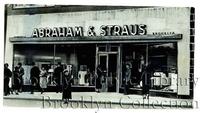 [Abraham & Straus storefront in Jamaica]
 View of storefront of Abraham & Straus branch department store in Jamaica, Queens; large Abraham & Straus sign over entrance and display windows; scattered pedestrians on sidewalk in front of store.
-
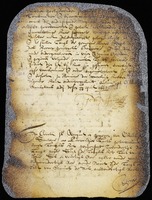 Certificate that sundry grants of land near Stuyvesant's bouwery had been made in the years 1659 and 1660 to various negroes
 Certificate granting land to freed African families, around Director-General Peter Stuyvesant's bowery or farm. A community of freed or "half-freed" Africans began to settle outside the northern limits of the colony, known as "free negroes land." Today, this area is around Washington Square Park. (5 pages and transcription)
-
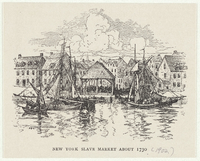 New York Slave Market about 1730
 In 1664, the British took control of New Netherland renaming the colony New York. Under the command of James, Duke of York, the British sought to turn New York colony into a major market for slaves. Being the Duke of York held an interest in the Royal African Company, the colony established an official slave market on Wall Street, between Pearl and Water Streets in 1711.
-
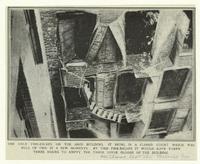 The Fire Escape
 The only fire escape on the Asch building available to the factory workers during the devastating fire. Printed on border: "The only fire-escape on the Asch building. It hung in a closed court which was full of fire in a few moments. By this fire-escape it would have taken three hours to empty the three upper floors of the building."
-
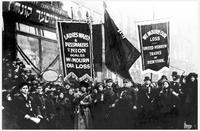 Ladies Waist and Dressmakers Union Local 25 and the United Hebrew Trades of New York march
 In the April 5th funeral procession for the seven unidentified fire victims, members of the United Hebrew Trades of New York and the Ladies Waist and Dressmakers Union Local 25, the local that organized Triangle Waist Company workers, carry banners proclaiming "We Mourn Our Loss."
-
 Dora Maisler Oral History
 Dora Maisler, a sample-maker working on the eighth floor of the Asch Building, describes the fire, her life afterwards, and memorializing the victims of the Triangle Shirtwaist Factory fire.
-
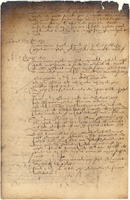 Dutch colonial council minutes, 27 June - 21 July 1639
 The Dutch Council never established clear parameters to those enslaved among the colony's population. Therefore, enslaved people or those with the status of "half-freedom" could own material goods, marry, own property, and partake in the colony's judicial system. In 1639, the council minutes note court proceedings, in which a slave, Pedro Negretto demanded payment from Jan Celes: "for the trouble he has taken in tending the defendant’s hogs." Celes was ultimately: "condemned to pay the plaintiff 2 schepels of maize."
-
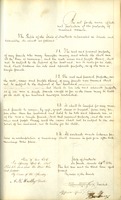 Act for the more effectual protection of the property of married women
 The Laws of 1848, Chapter 200, gave women the right to maintain property separate from their husbands. For the time, the law was quite radical. This law offered a way out from men's debts and money mismanagement — yet for working women, this newfound right was likely neither known by nor meant to apply to them. Working women, to be clear, were the most likely to end up in the poorhouse based on the death of a husband or a husband’s financial neglect. The law signals a growing divide between middle- and upper-class women and the female poor and the differing ways they advocated for their rights as women. Working women did seek certain everyday rights in the nineteenth century, but women's rights activists largely left working women out of their purview unless expressing concern for their “betterment.”
-
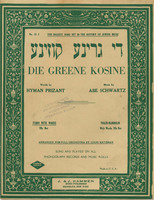 Sheet Music of "Die Greene Kosine"
 Di grine kuzine (English title "The Greenhorn Cousin," 1921) is one of the best known Yiddish songs that can be categorized as “disillusionment” song, in the immigrant era. The theme of the songs was about working-class Jewish who immigrated to new countries and faced economic difficulties.
-
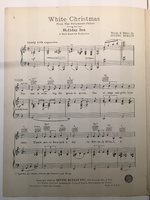 Sheet Music of "White Christmas"
 Irving Berlin was a Jewish composer who immigrated from Russia in 1893 to the U.S. and created many non-Jewish songs for broadway musicals. "White Christmas" is one of the most famous musical songs he wrote and was used for the musical "Holiday Inn."
-
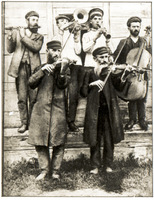 Grodzisk Mazowiecki, 1925. Hasidic musicians outside the rebbe's house, on the day of his daughter's wedding
 Grodzisk Mazowiecki and Hasidic musicians played Klezmer outside the rebbe's house, on the day of his daughter's wedding.